Vampirization as an infection
Let the Right One InVampirization as an infection is the explanation Virginia gives for the bodily changes that follow her attack, transforming a sequence of frightening symptoms into a condition she believes has been transmitted to her. Its significance lies in the double meaning of that recognition: naming the change relieves her of the belief that her horrifying impulses are simply her own, but it also forces her to acknowledge a growing hunger that may endanger others.
Recognition and Diagnosis
Virginia’s understanding begins with an ordinary trace that acquires new meaning. She smells urine beneath the toilet and identifies it as Lacke’s, then realizes that Morgan had used the bathroom during the evening when Virginia was brought home after being attacked and bitten. The connection makes the room evidence of an earlier visit: Morgan had been there while she lay on the couch, and the attack now seems to explain the changes that followed.
Her reasoning gathers separate bodily signs into a single diagnosis. She can see in the dark, has become sensitive to light, needs blood, and has noticed that cuts heal unusually quickly and sunlight affects her skin. At first, she considers whether an illness might explain what is happening, including one that could be treated in a hospital or psychiatric ward. The possibility of a medical explanation does not hold. Instead, Virginia says aloud that she is a vampire. The declaration gives a name to what she has experienced without making the condition any less difficult to accept.
Infection and Bodily Change
Virginia understands vampirization as something that happened to her, rather than as a voluntary choice. She connects it to the child who attacked her and describes the change as an infection that has grown since then. In her account to Lacke, its center is her heart; she compares its spread to cancer and says she cannot control it. This is Virginia’s explanation of her condition, presented through what she feels and believes, rather than a detached medical account of how vampirization works.
The effects she identifies are concrete and cumulative. Her altered vision, sensitivity to light, quickly healed cuts, and need for blood each make the change perceptible in a different way. Taken alone, any one sign might remain puzzling; together, they support the conclusion she reaches. The sequence matters: bodily experience comes first, and the word vampire follows as an interpretation that makes those experiences cohere. Her declaration does not erase uncertainty, but it replaces a disorder she imagines might be treatable with a more disturbing account of what has happened to her.
Hunger, Effort, and the Threat of Loss of Control
When Virginia talks with Lacke, she distinguishes between her present conduct and the appetite she fears may take over. She says that she is making an effort to remain in control and that she has been given blood. Neither fact reassures her fully. She believes that if she lets go, the infection could take over at any moment, and she tells Lacke that she wants to eat him. The threat is important not as proof that she has already acted on that desire, but as evidence of how immediate and frightening the hunger feels to her.
The scene makes control an unstable, ongoing effort rather than a settled state. Virginia can look at Lacke and speak to him, yet she experiences the same encounter through the possibility of consuming him. Her effort to resist does not remove the appetite; it keeps it in check for the moment. Blood supplied to her is part of that temporary management, while her account of the infection suggests that the underlying change continues. The condition therefore places care and danger side by side: Virginia is trying to preserve her restraint, but cannot promise that it will last.
Naming, Responsibility, and Disclosure
Virginia’s first recognition brings a measure of relief. Once the signs have fallen into place, she feels that the pressure in her head has eased and that a weight has lifted. She understands her revolting fantasies and the terrible things she did to herself during the night as consequences of vampirization, not as actions for which she is simply at fault. The diagnosis offers an explanation and a distinction between Virginia and the impulses she fears, though it does not absolve her of the danger those impulses pose.
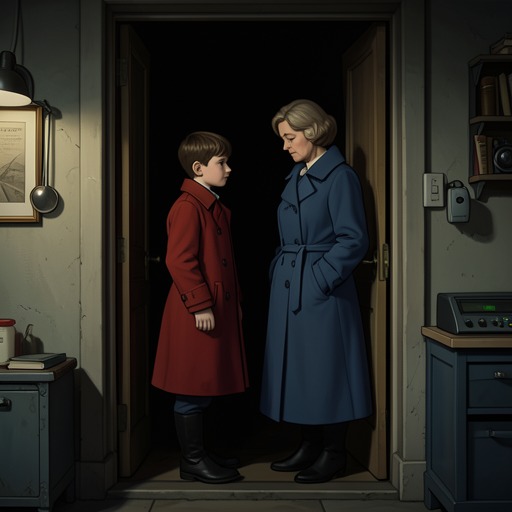
Her later disclosure to Lacke turns a private realization into something another person must confront. She tells him both that she has been infected and that she fears losing control while looking at him. Lacke initially rejects the account, but Virginia’s explanation is measured and specific: she identifies the supposed source, the infection’s growth, its location in her heart, the blood she has received, and the appetite she is resisting. The contrast between his disbelief and her certainty sharpens the scene’s central tension. To Virginia, vampirization is no longer an abstract impossibility; it is the only explanation that connects her bodily changes to her fear of what she might do.
Narrative Significance
The concept gives the novel a way to join physical transformation to moral uncertainty without making them identical. Virginia’s altered body supplies the evidence through which she recognizes the change, while her fear of harming Lacke makes its consequences relational. Her self-diagnosis does not turn her into a willing predator: she emphasizes effort and resistance even as she admits that the desire remains. At the same time, the infection cannot be reduced to a harmless label, since Virginia believes it is growing and may overcome her control.
That combination makes recognition both a relief and a warning. Calling the condition vampirization lets Virginia understand why her senses, healing, and need for blood have changed, and why thoughts that horrify her have appeared. But the explanation also leaves her facing a future she cannot confidently govern. The infection names what has happened to her; it does not resolve what she may become.